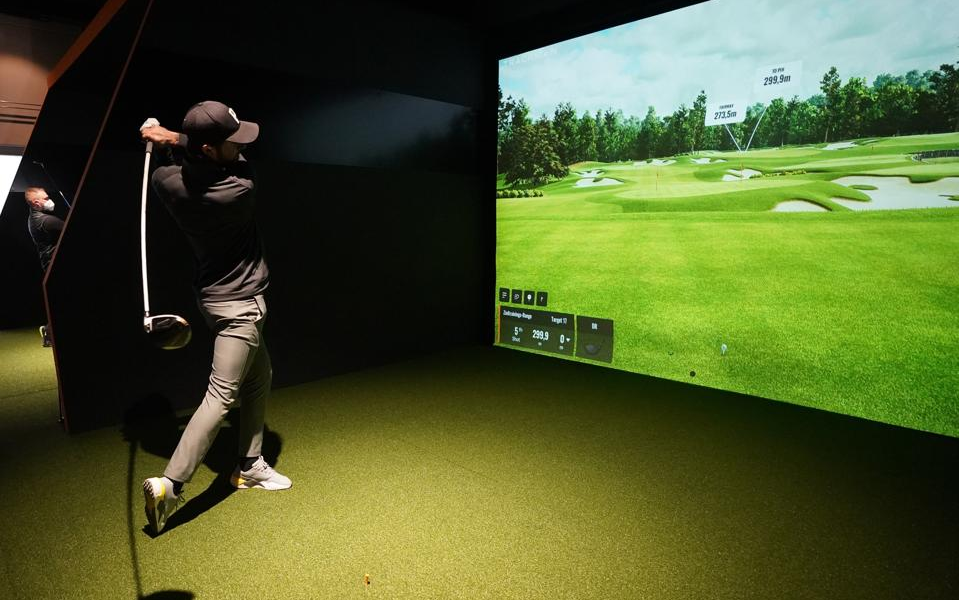

The decision to bring the game home is often born from a simple, shared frustration: the inability to practice when the weather turns, when daylight runs out, or when a quick trip to the driving range feels like a logistical hurdle. Homeowners who enjoy the game often find that the time spent commuting to a course or range is time that could be better spent hitting balls. This is where the interest in an indoor golf simulator setup typically begins. It is less about replacing the experience of playing a round on a sun-drenched course and more about creating a space where the mechanics of the swing can be refined on a flexible, personal schedule.
The Practical Challenges of Setting Up a Golf Simulator
Transforming a space into a functional practice area is often more complex than simply purchasing a screen and a hitting mat. One of the most common pitfalls is underestimating the physical requirements of a safe, comfortable swing. Many enthusiasts find that their initial plans hit a wall when they realize their ceilings are not quite high enough for a full driver swing, or that the room’s dimensions force a cramped posture that prevents a natural follow-through.
Beyond physical space, there is the challenge of light control. High-quality imagery on a projector requires a dark environment, yet most home spaces—such as garages or basements—have ambient light that can wash out the projection. Managing this balance between a usable workspace and a high-definition experience is a recurring theme in the planning phase. Furthermore, integrating the necessary hardware into a home network and ensuring the software runs smoothly on existing computers are details that can surprise those who expect a plug-and-play experience. Taking the time to measure, assess lighting conditions, and verify hardware compatibility before buying a golf simulator kit for home use is a critical step that saves significant effort later.
How Modern Simulation Technology Generally Operates
At the heart of any effective setup is the tracking technology. These systems function by capturing data about the clubhead or the ball at the moment of impact. While the exact methods vary, they typically involve either optical sensors or radar-based tracking. Optical systems often use high-speed cameras positioned around the hitting area to photograph the ball as it leaves the face of the club, using those frames to calculate speed, launch angle, and spin. Radar-based systems, by contrast, use radio waves to track the ball’s flight path through the air, providing a different set of data points based on movement and velocity.
Understanding which technology suits your space is vital. Some systems are designed to sit behind the player, while others must be positioned to the side. This placement determines not just the accuracy of the data, but the flow of the practice session. Once the hardware captures this information, it is transmitted to a software platform. The software then processes these data points to simulate the ball’s trajectory in a virtual environment. The result is a real-time visualization of how the shot behaves, allowing the player to adjust their grip, stance, or path based on immediate feedback.
Key Factors That Shape Your Practice Experience
The quality of the final setup is largely dictated by how the individual components interact. A high-end tracking system paired with a low-quality hitting surface or a pixelated screen will often result in a frustrating experience. Practitioners should consider the following elements as a cohesive system rather than individual purchases:
- Hitting Surface Quality: The mat is arguably the most underrated component. It needs to provide enough cushion to protect the joints from the repeated impact of striking a hard surface, yet remain firm enough to mimic the feel of actual turf.
- The Projection Surface: The impact screen acts as a canvas. A screen that is too thin may not absorb the force of the ball effectively or may create too much noise, while one that is too thick can result in a poor-quality image.
- Software Sophistication: The virtual environment should be compatible with your goals. Some software packages focus heavily on data analysis for serious practice, while others emphasize the social aspect of playing famous courses with friends.
- Frame and Enclosure: A robust enclosure is necessary to contain errant shots. Protecting the surrounding walls and ceiling of the home is a safety imperative that should not be compromised.
Practical Approaches to Building Your Setup
When approaching the installation of an indoor golf simulator, it is generally more effective to prioritize long-term utility over short-term savings. Start by defining the primary goal of the space. Is it for high-fidelity data tracking to improve your handicap, or is it intended to be a relaxed, entertainment-focused area? This distinction will guide the selection of hardware and software.
When selecting an indoor golf simulator, ask providers about the modularity of the kit. Can the system be upgraded as your needs change? Many users find that they start with a basic launch monitor and later decide to add a projector, larger screen, or more advanced software subscriptions. A system that allows for these incremental additions is often a more sustainable choice than one that requires a full replacement to add new features.
Additionally, pay close attention to the documentation provided by manufacturers regarding space requirements. They often specify the recommended distance between the tee and the screen, as well as the necessary clearance behind the player for a full swing. Adhering to these general guidelines helps ensure that the environment remains safe for everyone using it and that the sensors operate within their optimal performance range.
If you are uncertain about how a specific golf simulator kit for home usage will perform in your particular room, look for opportunities to view similar setups in person or consult with those who have experience installing them in residential environments. Understanding how a system handles common issues like shadow interference or connectivity can prevent the frustration of realizing your setup is incompatible with your room’s unique layout after the boxes have already been opened.
The path to a satisfying simulation experience is characterized by preparation, thoughtful component selection, and a realistic assessment of your available space. By focusing on how these elements work together to support your specific goals, you can create a reliable practice space that brings the efficiency and enjoyment of the game directly into your home. Establishing a clear, step-by-step plan for your equipment and space ensures that your investment remains a source of progress and fun for the long term.